

If you've ever worked in industrial power distribution, construction, or commercial building management, you've likely heard of GGD low voltage switchgear sets - one of the most widely used electrical distribution components for reliable power control, protection, and monitoring at 1kV and below. As a supplier specializing in low voltage switchgear solutions, I've spent years walking clients through the critical question that arises at every stage of a project: what safety standards apply to GGD low voltage switchgear sets? Skipping these standards doesn't just risk component failure - it creates life-threatening hazards, regulatory non-compliance, and costly downtime that can derail entire operations. In this post, I'll break down the core safety frameworks that govern GGD sets, how they differ from related switchgear lines like GGD Low Voltage Switchgear Set, and why aligning with these standards is non-negotiable for any project.
First, let's ground this in what GGD low voltage switchgear sets are, and why their specific safety requirements matter. Unlike withdrawable switchgear types designed for easy maintenance and component replacement - such as GCK Low-Voltage Withdrawable Switchgear, MNS Low-Voltage Withdrawable Switchgear, and GCS Low-Voltage Withdrawable Switchgear - GGD sets are fixed, meaning their internal components (circuit breakers, fuses, relays, and busbars) are mounted directly to the cabinet structure, not removable without full power shutdown. This fixed design makes GGD sets ideal for applications with consistent, high-load requirements like manufacturing plants, data center backup power, and commercial building electrical rooms, but it also creates unique safety risks: confined work spaces, arc flash hazards during internal component failure, and long-term component thermal stress that must be engineered to strict safety rules.
The first and most universal set of standards governing all low voltage switchgear - including GGD sets - comes from the International Electrotechnical Commission (IEC), the global body that sets consensus-based electrical safety rules. The primary IEC standard for low voltage switchgear and controlgear assemblies is IEC 61439, split into two main parts: IEC 61439-1, which lays out general safety requirements for all assemblies, and IEC 61439-6, which covers low voltage switchgear for specific applications, including GGD sets used in industrial and commercial distribution. What makes IEC 61439 critical for GGD sets is that it moves beyond generic component testing to validate the entire assembly's performance. For example, GGD sets tested to IEC 61439 must demonstrate sufficient insulation resistance to prevent electric shock, with a minimum value of 1 megohm per kilovolt of operating voltage. They also must pass temperature rise tests: when operating at full rated load, the cabinet's external surfaces, internal busbars, and connected wiring can't exceed specified temperature thresholds, which prevents insulation degradation, fire risks, and component failure. This is a key requirement for GGD sets in particular, because their fixed design means heat isn't easily dissipated like it is in withdrawable switchgear with separate, vented compartments.
In North America, the primary standard for low voltage switchgear is issued by the Underwriters Laboratories (UL), specifically UL 891: Standard for Switchboards. For GGD sets being used in the U.S. or Canada, compliance with UL 891 is often mandatory to meet National Electrical Code (NEC) requirements, though it's important to note that GGD sets may also need to meet additional Canadian Standards Association (CSA) rules for installations in Canada. UL 891 tests focus on similar safety pillars as IEC 61439, but with region-specific adjustments. For example, arc flash protection is a larger priority in North American installations, and UL 891 requires GGD sets to be tested for arc flash resistance, meaning they can safely contain an internal arc fault and prevent it from propagating to external personnel. Additionally, UL 891 mandates that all exposed live parts in GGD sets be guarded or insulated to prevent accidental contact, a critical safety feature in electrical rooms where maintenance teams may work in close proximity to the cabinet.
Many clients also ask about standards specific to functional safety, not just electrical safety, especially when GGD sets are integrated with capacitor banks for power factor correction. For these applications, components like GCJ Low-voltage Capacitor Switchgear (often paired with GGD sets for power quality management) must comply with IEC 60831: Shunt Power Capacitors and their connection to low voltage networks, as well as IEC 60204: Safety of Machinery, which covers the control and protection of electrical equipment in industrial settings. This standard requires that GGD sets paired with capacitor switchgear have overvoltage and overcurrent protection built in to prevent capacitor bank failure, which can cause explosions, fires, and power outages. For example, IEC 60204 mandates that GGD sets used in conjunction with GCJ capacitor switchgear have separate fuses or circuit breakers for each capacitor unit, ensuring that a single failed capacitor doesn't take down the entire distribution system - a safety feature that's non-negotiable for facilities relying on consistent power.
Beyond these international and regional standards, there are site-specific and industry-specific safety rules that apply to GGD low voltage switchgear sets. For example, in the oil and gas industry, GGD sets must comply with ATEX directives (for explosive atmospheres) to prevent sparks from igniting flammable gases or dust. In healthcare facilities, GGD sets must meet NFPA 99, the Standard for Health Care Facilities, which requires higher levels of arc flash protection and redundant power systems to ensure continuous operation - a critical safety requirement for hospitals where power outages can threaten patient lives. For commercial construction in the European Union, the Construction Products Regulation (CPR) requires that GGD sets meet specific fire safety standards, including resistance to flame spread and smoke emission, to protect building occupants in the event of a fire.
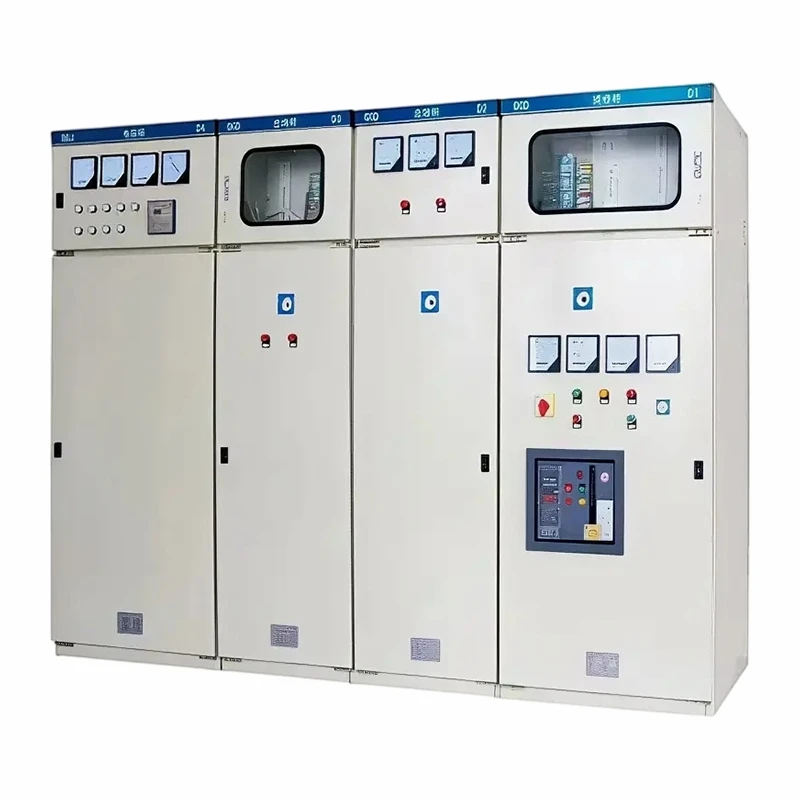

One common mistake I see as a supplier is clients assuming that generic low voltage standards apply equally to GGD sets and withdrawable switchgear. While all low voltage switchgear shares core safety requirements (insulation, temperature control, overcurrent protection), GGD's fixed design means it has unique validation steps. For example, unlike withdrawable switchgear that can have individual components pulled for testing, GGD sets are tested as a single, integrated unit to ensure that busbar connections, wiring, and component placement work together safely. This is why it's so important to source GGD sets from a supplier that doesn't just claim compliance, but provides third-party test reports (called type test reports) that prove the set meets IEC 61439 or UL 891 requirements. These reports are not optional; most electrical inspectors will require them before approving a new installation, as they confirm the set hasn't been assembled from untested parts that could fail under load.
Another often-overlooked safety aspect of GGD sets is maintenance and operational safety, which is covered by standards like IEC 60364: Low-Voltage Electrical Installations in Buildings, and OSHA 29 CFR 1910 in the U.S. These standards require that GGD sets have clear labeling for all circuits, including voltage ratings and purpose, to prevent maintenance teams from working on the wrong circuit. They also mandate lockout/tagout (LOTO) compatibility, meaning GGD sets should have designated points to lock out power during maintenance, preventing accidental energization. For a fixed cabinet like GGD, this is particularly important because maintenance often requires working inside the cabinet, where even a small error can cause severe electric shock or arc flash. OSHA estimates that over 2,000 arc flash incidents occur annually in the U.S., many related to improper work on fixed switchgear like GGD sets - so aligning with these operational safety standards isn't just a regulatory requirement, it's a way to protect workers.
As a supplier of low voltage switchgear solutions, I've seen firsthand how cutting corners on safety standards leads to costly mistakes. Last year, a small manufacturing client came to me with a GGD set they had sourced from a non-compliant vendor; it failed its first electrical inspection because it didn't meet IEC 61439 temperature rise requirements, leading to overheating that had already damaged three connected motors. The client had tried to save 15% on upfront costs, but ended up paying three times that to replace the cabinet, redo the installation, and cover the downtime from the failed motors. That experience underscores a simple truth: when it comes to GGD low voltage switchgear sets, safety standards aren't a box to check - they're the foundation of reliable, safe power distribution.
Whether you're specifying GGD sets for a new industrial plant, retrofitting a commercial building, or upgrading power systems for a critical facility, partnering with a supplier that prioritizes compliance with global, regional, and industry-specific safety standards is key. We specialize in providing fully compliant GGD sets, backed by third-party test reports, tailored to meet your project's unique requirements, from pairing with GCJ Low-voltage Capacitor Switchgear for power factor correction to meeting North American UL 891 rules for U.S. installations. If you'd like to discuss your project, request a sample test report, or learn more about how our compliant GGD solutions can meet your safety and performance needs, we're here to help.
References
- International Electrotechnical Commission. (2020). IEC 61439-1: Low-voltage switchgear and controlgear assemblies - Part 1: General rules.
- International Electrotechnical Commission. (2019). IEC 61439-6: Low-voltage switchgear and controlgear assemblies - Part 6: particular requirements for assemblies for low-voltage power distribution.
- Underwriters Laboratories. (2022). UL 891: Standard for Switchboards.
- National Electrical Manufacturers Association. (2021). Application Guide for Low-Voltage Switchgear.
- Occupational Safety and Health Administration. (2023). 29 CFR 1910 Subpart S: Electrical.
- International Electrotechnical Commission. (2018). IEC 60204-1: Safety of machinery - Electrical equipment of machines - Part 1: General requirements.