

If you're someone who works in industrial power distribution or facility management, you've probably heard the term "GGJ low voltage capacitor switchgear" thrown around, but you might still be wondering: what's its actual voltage range? As a supplier specializing in this gear, I get this question all the time-especially from clients who're sizing equipment for new projects or upgrading old systems. Let's break it down, no jargon overload, just the straight facts you need.
First, let's start with what GGJ low voltage capacitor switchgear even does. It's a specific type of low voltage switchgear built to manage power factor correction (PFC) by controlling capacitor banks. Capacitor banks fix issues like lagging power factor, which wastes energy and can lead to higher utility bills. The GGJ line is tailored for this exact task, so its voltage range isn't arbitrary-it's calibrated for the sweet spot where low voltage capacitor applications work best.
So, the core voltage range for standard GGJ units is 220V to 690V AC. That's RMS (root mean square) voltage, by the way, which is what most utility grids and industrial equipment use for low voltage operations. Wait, some people ask if it goes below 220V? Technically, you can get custom GGJ configurations for smaller 110V or 120V applications, but those are rare because 220V is the minimum where capacitor banks deliver meaningful PFC results without overcomplicating the gear. On the high end, 690V is the standard max for low voltage; anything above that falls into medium voltage territory, and GGJ isn't designed for that.
Now, why this range matters. If you're working with a 480V three-phase system-super common in factories, commercial buildings, and data centers-GGJ fits perfectly. If you tried to use a higher-voltage switchgear for a 690V setup, you'd be overspending on unnecessary insulation and protection. And if you used a low-voltage switchgear rated for 200V on a 690V line, it'd fail catastrophically. That's why sticking to the GGJ's designed range ensures safety, reliability, and compliance with electrical codes.
But let's not stop at the basics. You might be comparing GGJ to other switchgear lines, and that's a smart move. For example, if you're looking for withdrawable low voltage gear, you might have seen GCS Low-Voltage Withdrawable Switchgear, GCK Low-voltage Withdrawable Switchgear, or MNS Low-Voltage Withdrawable Switchgear. Wait, how do those stack up against GGJ? The key difference is that GCS, GCK, and MNS are general-purpose withdrawable switchgear, used for things like motor control and distribution, not specific capacitor management. GGJ is purpose-built, so it has extra features for capacitors like inrush current suppression, which general-purpose gear doesn't always include. That means GGJ is more efficient and less likely to cause issues when switching capacitor banks on and off.
Another common comparison is GGD Low Voltage Switchgear Set. GGD is a fixed low voltage switchgear, popular in smaller industrial or commercial setups. But again, GGD isn't optimized for capacitors. It's good for general distribution, but if you're adding or updating capacitor banks, GGJ will give you better performance and longer life. For example, a GGD unit might handle a 480V capacitor, but it might not have the controls to balance reactive power as effectively as GGJ does. That's why clients who need dedicated PFC go with GGJ Low-voltage Capacitor Switchgear specifically.
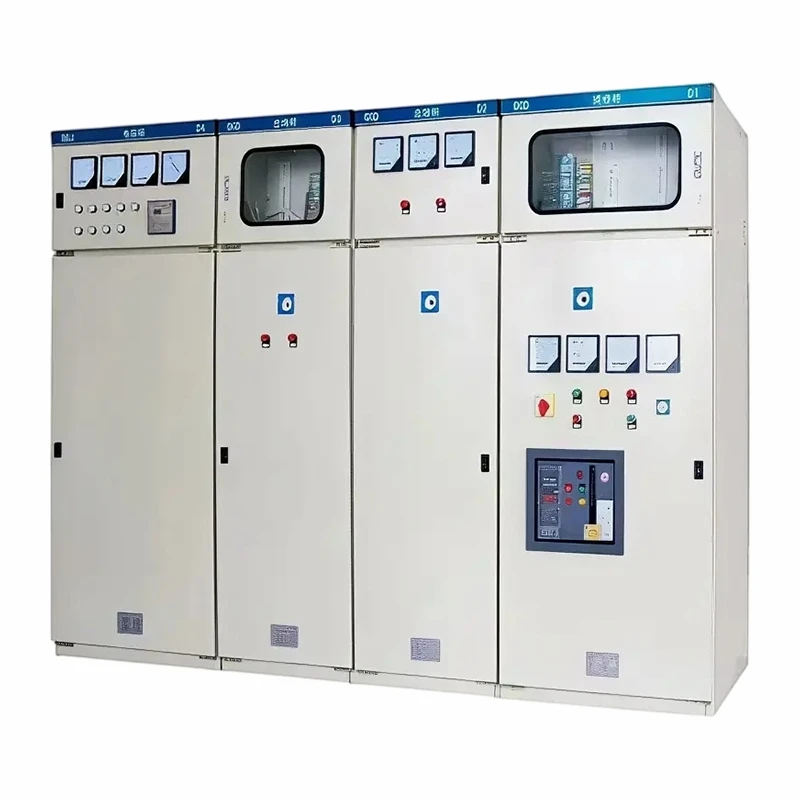

Now, let's talk about the fine print: factors that can shift the effective range. For instance, altitude. If you're installing GGJ gear at 1,000 meters or higher above sea level, the air is thinner, so insulation performance drops. At altitudes up to 2,000 meters, we usually derate the max voltage slightly-so 690V might go down to 660V. Above 2,000 meters, we can still customize GGJ to fit, but it's not the standard range. Also, temperature: if your facility is in a hot climate (above 40°C), the voltage range might need a small adjustment to prevent overheating, but that's a minor tweak, not a full range change.
Real-world examples will make this clearer. Let's say a food processing plant has a 480V three-phase system, and they want to add a 500kVAr capacitor bank to cut their power bills. A GGJ unit rated 220V to 690V would be perfect here-it integrates the capacitor bank, controls, and protection all in one, so they don't have to wire multiple pieces of equipment. Another example: a retail chain with multiple 230V single-phase lines (common in North American commercial spaces). Custom GGJ units can be configured for 230V, which is within the lower end of the standard range, to handle smaller capacitor banks for lighting or HVAC systems.
I've seen clients make mistakes here before. One small manufacturing plant tried to use a general-purpose withdrawable switchgear for their capacitor bank, and within a year, they had three capacitor failures because the gear didn't have the right inrush current protection. They switched to GGJ Low-voltage Capacitor Switchgear, and since then, they haven't had a single issue. That's the value of purpose-built gear-you don't have to fix problems that weren't designed to happen.
Now, let's address a question I get often: can GGJ handle DC? No, definitely not. It's exclusively for AC, which is what all utility low voltage grids use. DC systems are a whole different ballgame, and you'd need specialized DC switchgear for that. So if your project involves DC, GGJ isn't the right fit, but if it's AC, you're covered within that 220V to 690V range.
Another point: compliance. The GGJ line meets international standards like IEC 60439 (low voltage switchgear and controlgear assemblies) and NEC (National Electrical Code) requirements for PFC equipment. That means it's safe to use in most regions, from North America to Europe to Asia. The voltage range is aligned with these standards, so you don't have to worry about running afoul of local electrical codes.
Wait, let's circle back to those other switchgear lines to clear up confusion. If you need withdrawable gear for general distribution, GCS, GCK, or MNS are solid choices. But if your main goal is capacitor management, GGJ is way more tailored. GGD is a fixed alternative, but again, not purpose-built. So when you're choosing, ask yourself: is this switchgear for PFC? If yes, GGJ is the way to go. If it's for general power distribution, one of the other lines might work.
Now, how do you pick the right GGJ unit for your project? It's not just about voltage range-you also need to match the capacitor bank's kVAr rating, the number of phases, and the ambient conditions. But knowing the voltage range is the first step. For most projects, if your system is between 220V and 690V, standard GGJ will work. If you're outside that, just reach out, and we can customize a solution.
I know this can feel overwhelming, especially if you're not an electrical engineer. You shouldn't have to dig through technical manuals to figure out what gear fits your needs. That's why as a GGJ low voltage capacitor switchgear supplier, my team and I are here to help. Whether you're designing a new facility or upgrading an old one, we can walk you through the voltage range, features, and custom options to make sure you get the right gear for the job.
At the end of the day, the voltage range of GGJ low voltage capacitor switchgear is built to be flexible for the most common low voltage applications. It's not too narrow that it limits you, and not too broad that it's unnecessary. That balance is what makes it a go-to for so many industries. But don't just take my word for it-compare it to other lines like GCS Low-Voltage Withdrawable Switchgear, GCK Low-voltage Withdrawable Switchgear, MNS Low-Voltage Withdrawable Switchgear, or GGD Low Voltage Switchgear Set. You'll see that GGJ's focus on capacitor management makes it stand out when you need that specific functionality.
If you're ready to talk through your project, whether you're a small business owner, a facilities manager, or an electrical contractor, don't hesitate to reach out. We can answer any questions about voltage range, custom configurations, or how GGJ can help you with your power factor correction goals. It's better to get the right gear upfront than to deal with repairs or inefficiencies down the line.
References:
- International Electrotechnical Commission. (2020). IEC 60439-1: Low-voltage switchgear and controlgear assemblies - Part 1: General rules.
- National Electrical Manufacturers Association. (2021). Low-Voltage Switchgear Application Guide.
- ABB Group. (2023). Low-Voltage Capacitor Switchgear Technical Specification.
- Industrial Power Distribution Association. (2022). Power Factor Correction Best Practices for Commercial and Industrial Facilities.