

If you've ever driven past a construction site at dawn and spotted a compact, weatherproof container with faint hums from inside, chances are you've seen a mobile prefabricated substation-though you might not have known it by name. For the last seven years, I've worked as a sales lead for a company that designs and builds prefabricated modular substations, and over that time, I've lost count of how many times clients have asked me to cut through the jargon: "What exactly is this thing, and why does it matter more than the traditional brick-and-mortar substation I used to hear about?"
Let's start with the basics. A mobile prefabricated substation (sometimes called a prefab substation, modular substation, or packaged substation) is a self-contained, factory-assembled electrical system that combines all the components of a traditional ground-mounted substation into a single, transportable unit. Unlike its permanent counterpart- which requires pouring concrete foundations, laying custom wiring, and assembling equipment on-site over weeks or even months-this type of substation is built almost entirely in a controlled factory environment. Then it's tested, loaded onto a truck, and delivered ready to connect to the grid, cutting installation time by 70% or more in most cases.
The core components don't change from traditional substations: you've got transformers that step voltage up or down, switchgear that controls electrical flow, circuit breakers for safety, and monitoring systems to track performance. The difference is how these parts are housed. Mobile substations use modular enclosures-often steel or aluminum, sometimes even repurposed shipping containers, which is why you'll also hear them called modular containerized substations. That housing isn't just a box; it's engineered to protect the internal equipment from rain, dust, extreme temperatures, and vandalism, so it works reliably in everything from remote mining camps to downtown construction zones.
I'll admit, when I first got into this business 2016, I was confused by all the different voltage ratings clients referenced. It took a few on-site visits to mining sites and temporary commercial developments to realize that not all mobile substations are one-size-fits-all. For example, a small residential construction project might only need a 6.6kV unit to power a handful of homes and job site tools, while a new industrial plant or solar farm might require a 22kV unit to handle larger power loads. That's why we offer tailored solutions, with dedicated pages for our most popular configurations: 6.6kV Prefabricated Substation options for lower-load temporary sites, 22kV Prefabricated Substation for medium to heavy industrial or utility use, and complementary variants like 6.6kV Modular Substation and 22kV Modular Packaged Substation for clients who prioritize specific space or mounting requirements. We also build Modular Containerized Substation units for clients who need full weather and security protection in remote, access-limited areas.
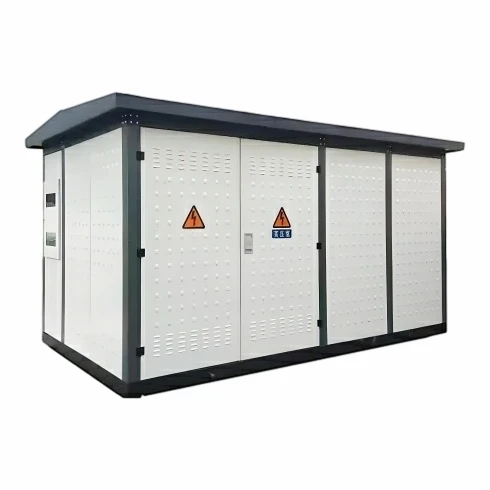

One of the biggest mistakes people make is writing off mobile substations as "temporary" and therefore less reliable than permanent ones. Let's set that straight right now: while they are easy to move (you can disconnect them, transport them to a new site, and reconnect in a matter of days), they are built to meet the same international safety and performance standards as permanent substations. During factory assembly, every component is tested twice: once before the unit leaves the factory, and again on-site during installation to confirm connections are tight and systems run smoothly. For clients in regions with harsh weather-think monsoons in Southeast Asia, extreme cold in Canada, or intense dust in the Australian outback-this factory testing is a huge benefit. We can calibrate units to handle specific environmental conditions before delivery, so there's no guesswork when the truck pulls up to the site.
Let's talk about the use cases, because that's where this technology shines. Early on, our clients were almost exclusively mining companies and utility firms that needed power for short-term remote projects. A gold mine in Western Australia might only operate for three years, so building a permanent substation would waste time and money. Instead, they rent or buy a mobile substation, use it for the mine's lifespan, then move it to a new site when the mine closes. That's a huge cost saver, and it reduces waste-no need to demolish a permanent structure once the project ends.
In the last five years, though, we've seen a huge surge in demand from construction, renewable energy, and commercial sectors. Large residential construction projects, for example, often need temporary power for tools, lighting, and worker facilities before the permanent grid is connected. A mobile substation can be set up in a day, so crews don't have to wait weeks for utility companies to install a temporary line. Solar farms, which are often built in rural areas far from existing substations, use mobile units to step down high-voltage solar output to a level that can be fed into the local grid. Even event planners use them for large festivals, concerts, or sports tournaments that need reliable temporary power for tens of thousands of attendees.
Another key advantage of mobile prefabricated substations is their footprint. Traditional substations need a lot of space: you have to clear land for foundations, access roads, and buffer zones to keep equipment away from people. Mobile units are compact-most are 20 or 40 feet long, standard shipping container sizes-so they fit into small urban lots, tight construction sites, or remote areas where land is at a premium. For city planners, that's a game changer, especially as urban populations grow and open space becomes scarce.
I should also mention maintenance, which is simpler with mobile units. Because all components are in one, accessible enclosure, technicians don't have to dig through concrete or navigate a large, spread-out substation to fix a small issue. We design our units with easy-to-access panels and remote monitoring capabilities, so our team can often diagnose problems before a technician even arrives on-site. When repairs are needed, we can swap out faulty components quickly, or even move the entire unit to a workshop if the issue is complex, without disrupting the entire power supply.
Of course, mobile substations aren't for every situation. If you need a permanent power source for a 50-year manufacturing plant in a stable location, a traditional substation might still be the right choice-it's cheaper in the long run for long-term fixed sites. But for any project with a tight timeline, variable power needs, or temporary location, mobile prefabricated substations are often the most cost-effective, efficient, and reliable option.
Over the years, I've seen firsthand how this technology has transformed industries. A few months ago, I worked with a construction company building a 100-unit apartment complex in downtown Toronto. They were facing a two-week delay from the utility company for temporary power, which would have pushed back the start of construction and cost thousands in daily fees. We delivered a 22kV modular packaged substation in three days, and they were able to start on schedule. That's the kind of impact this equipment has: it doesn't just power sites-it keeps projects on track, saves money, and reduces waste.
If you're evaluating power solutions for your next project, whether it's a mining site, construction development, renewable energy farm, or temporary event, take the time to talk to a specialist about mobile prefabricated substations. We can help you choose the right voltage, enclosure type, and configuration-from small 6.6kV units to heavy-duty 22kV models, including containerized options for remote or secure sites-to fit your specific needs.
To discuss your requirements and get a tailored recommendation, don't hesitate to reach out for procurement and negotiation. We're here to help you find the right power solution for your project, with the flexibility and reliability that mobile prefabricated substations are known for.
References
- International Electrotechnical Commission (IEC). IEC 62271-200: High-voltage switchgear and controlgear – Part 200: AC metal-enclosed switchgear and controlgear for rated voltages above 1 kV and up to and including 52 kV.
- Institute of Electrical and Electronics Engineers (IEEE). IEEE C37.20.7: Guide for Metal-Enclosed Modular Substations for Rated Voltages Above 1000 V.
- Construction Owners Association of America (COAA). Temporary Power Solutions for Large Construction Projects: Best Practices and Cost-Benefit Analysis.
- International Energy Agency (IEA). The Role of Modular Power Infrastructure in Accelerating Renewable Energy Deployment.
- National Electrical Manufacturers Association (NEMA). Standards for Prefabricated Package substations for Industrial and Utility Applications.