China's New Efficiency Rules Signal a Global Shift: Why Loss-Rated Transformers Are the Safe Choice
Every decade or so, a regulatory shift in one large market quietly resets what the rest of the world considers normal. China's transformer sector is living through one right now - and utilities, EPC contractors and industrial buyers elsewhere should read the signal, because it predicts where specifications are heading globally.
What changed
China's mandatory national standard GB 20052-2024, "Minimum allowable values of energy efficiency and energy efficiency grades for power transformers," took effect on 1 February 2025, fully replacing the 2020 edition. Three things make it a genuine step-change rather than a paperwork update:
It is mandatory, not recommended - non-compliant units cannot be sold into covered applications, which forces the whole supply base upward at once.
Its scope expanded for the first time to renewable generation-side transformers - six new energy-efficiency grade sets covering 6 kV–66 kV photovoltaic, wind and storage transformers, in both oil-immersed and cast-resin types.
It tightens no-load and load-loss limits across the covered range, accelerating the shift toward amorphous-alloy and advanced grain-oriented steel core designs.
In March 2026, four central government departments - MIIT, NDRC, SASAC and the National Energy Administration - followed up with the Implementation Plan for High-Quality Development of Energy-Saving Equipment (2026–2028), which sets the direction that energy efficiency of key equipment including transformers should reach internationally advanced levels by 2028, with an explicitly higher share of ultra-low-loss designs in new installations.
Why this matters outside China
The pattern is not unique to China. Grid-loss reduction is on utility regulatory agendas from South Asia to Central Asia and Africa: distribution transformers typically operate 20+ years, and no-load loss accrues 24 hours a day whether or not current flows. A one-percentage-point cut in a feeder's transformer losses is worth more than the purchase-price difference several times over - which is exactly the total-cost-of-ownership logic these standards are built on.
For buyers in emerging markets, three practical conclusions:
Specifying to loss-rated designs protects the asset. Where tender documents still reference legacy loss tables, the equipment being bought is already behind the regulatory curve in the world's largest transformer market - the cheapest unit today can become the non-compliant asset in a future retrofit programme.
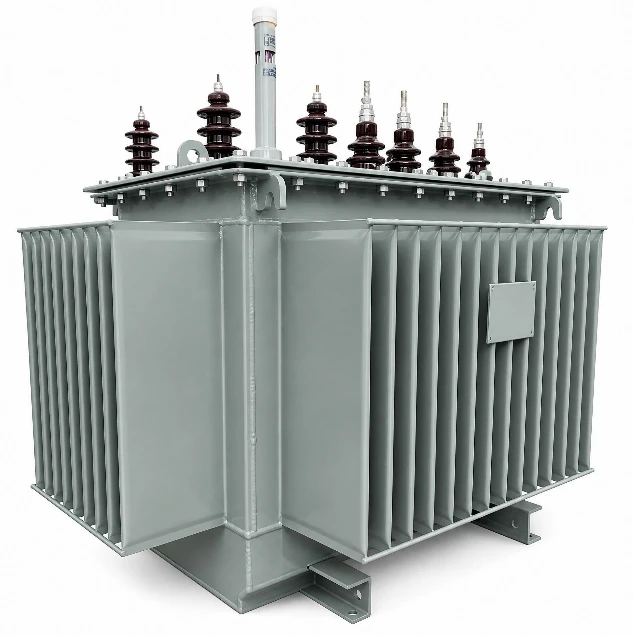
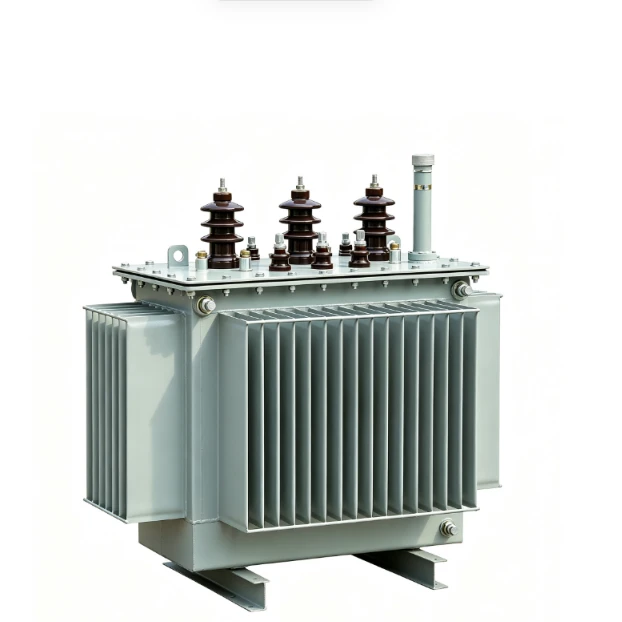
Amorphous-core distribution transformers are now mainstream, not exotic. Ten years ago SH15-class units carried a price premium and scarce suppliers. China's efficiency transition scaled the technology; buyers today can get proven amorphous-alloy designs from established clusters with normal lead times.
Renewables-side efficiency is the next wave. Once distribution transformers are regulated, generation-side units (PV, wind, storage) usually follow - as China did in 2025. Solar plant owners evaluating transformers today should expect loss documentation to matter in their own markets within the planning horizon of most PPAs.
How Xunchi Electric reads it
Our energy-saving range - S11–S13 oil-immersed distribution transformers and SH15 amorphous-alloy units - was built for exactly this direction of travel, and our export quotations to grid and industrial customers now routinely include no-load and load-loss values as a comparison line, not an appendix. Where a buyer's own national standard is behind the technology curve, we point out the loss difference in rupee, tenge or dollar terms over the asset life, and let the arithmetic make the argument.
A transformer is bought once and paid for in losses every day afterwards. The regulatory direction is clear; the sensible specification is to buy ahead of it.
Send your capacity range, standard and loss requirements through our inquiry page - we will return a proposal comparing conventional and amorphous-core options on both price and lifetime loss cost.